

Power System
With 120W allocated to payload, MOI-1 processes imagery in real-time while capturing new frames. The AI Cube and imager operate together continuously—even through eclipse—without throttling.
120W payload allocation
67.2W peak solar generation
200Wh Li-ion battery
Continuous operation through eclipse

“There’s space for all.”

Need some satellite payload space?

Money
Time
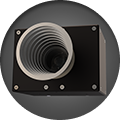


At TakeMe2Space, we design and build the bus, subsystems, AI Cube, and imager ourselves. It's not a strategy so much as a consequence of how we think about spacecraft—when you control the full stack, you understand it completely. The result is faster build cycles, tighter integration, and a cost of turnaround that reflects the actual work, not a supply chain. MOI-1 is what that looks like in orbit.
Why integrate vertically?
Controlling the full stack means no supplier delays, no back-and-forth approvals, and no waiting on third-party schedules. From design to integration, we move at the pace of engineering decisions, not procurement cycles. Faster iterations. Shorter lead times. Launch windows met without compromise.
When you build subsystems in-house, the cost reflects actual work—not a supply chain. No markup layers. No inflated quotes for custom configurations. The price you pay is the engineering effort and materials, not someone else's margin. That difference compounds across every satellite we build.
Built with science.
(on Earth)
-
Proprietary TM2S Ta-tape technology, up to 10x TID reduction
-
5-year mission life on components rated for months
-
Enables terrestrial electronics to survive LEO radiation
TM2S's proprietary high-Z material coating shields electronics from high-energy radiation. What would degrade in months now operates for years—enabling terrestrial-grade processors in orbit. Protected by science, not by mass.

LONGER MISSION
LIFE
10X
RadShield Coating

Deliver
API-ready intelligence arrives without ground-based post-processing
Downlink
Compressed insights are transmitted via encrypted S-Band link
Filter
Actionable intelligence flagged for downlink transmission
Process
On-orbit AI models extract insights from raw sensor data in space
Capture
Multispectral imagery acquired with precision pointing and active scheduling


Process terabytes in orbit, downlink only insights 60-94% cost reduction vs. traditional workflows
Orbital Processing Pipeline
Money
Time
At TakeMe2Space, we design and build the bus, subsystems, AI Cube, and imager ourselves. It's not a strategy so much as a consequence of how we think about spacecraft—when you control the full stack, you understand it completely. The result is faster build cycles, tighter integration, and a cost of turnaround that reflects the actual work, not a supply chain. MOI-1 is what that looks like in orbit.
Why integrate vertically?
Controlling the full stack means no supplier delays, no back-and-forth approvals, and no waiting on third-party schedules. From design to integration, we move at the pace of engineering decisions, not procurement cycles. Faster iterations. Shorter lead times. Launch windows met without compromise.
When you build subsystems in-house, the cost reflects actual work—not a supply chain. No markup layers. No inflated quotes for custom configurations. The price you pay is the engineering effort and materials, not someone else's margin. That difference compounds across every satellite we build.



An eye for
detail.
MOI-TD: 394 orbits. All systems nominal. TRL 8: flight-proven and production-ready. MOI-1A: An orbital AI lab with 117 TOPS of compute, 9-band multispectral imaging, and the power budget to run continuously—launching October 2026.
6U CubeSat 226.3 × 100 × 366mm | 14 kg mass 120W peak power | 117 TOPS compute
2 TB on-board storage | 9-band multispectral imaging
<0.025° pointing accuracy
Built for science.
(in space)

AI-Cube
A high-performance AI processing unit optimised for the space environment. Enables real-time data processing and autonomous decision-making for CubeSats and small satellites.
117 TOPS on-orbit compute (Nvidia Jetson Orin NX)
16GB 128-bit LPDDR5 (102.4 GB/s bandwidth)
2TB on-board storage (configurable to 4TB)
Optimised and minimal power consumption (10W-55W)
RadShield-protected terrestrial GPU surviving LEO radiation
<0.025° pointing accuracy (1σ)
3°/s slew rate for rapid retargeting
StarSense Lite star tracker + 4× reaction wheels
Precision Pointing

Sensor CMV4000 (CMOS)
Raw Resolution 2048 x 2048 pixels
Per-Band Resolution 682 x 682 pixels
Pixel Formats Mono8 (8-bit), Mono10p (10-bit), Mono12p (12-bit)
Default Exposure 12.61 ms
Frame Rate 15 FPS
Interface USB3 Vision
Imager
